How a Simple Morning Ritual Changed Everything I Believed About School
It’s early morning. I am standing in my classroom, looking out of the window. The first children are trickling onto the school grounds.
I watch the colourful scene unfold. Sometimes I focus on individual children. In my mind, I wonder how their morning has been so far. How they are feeling. What expectations they are bringing with them today.
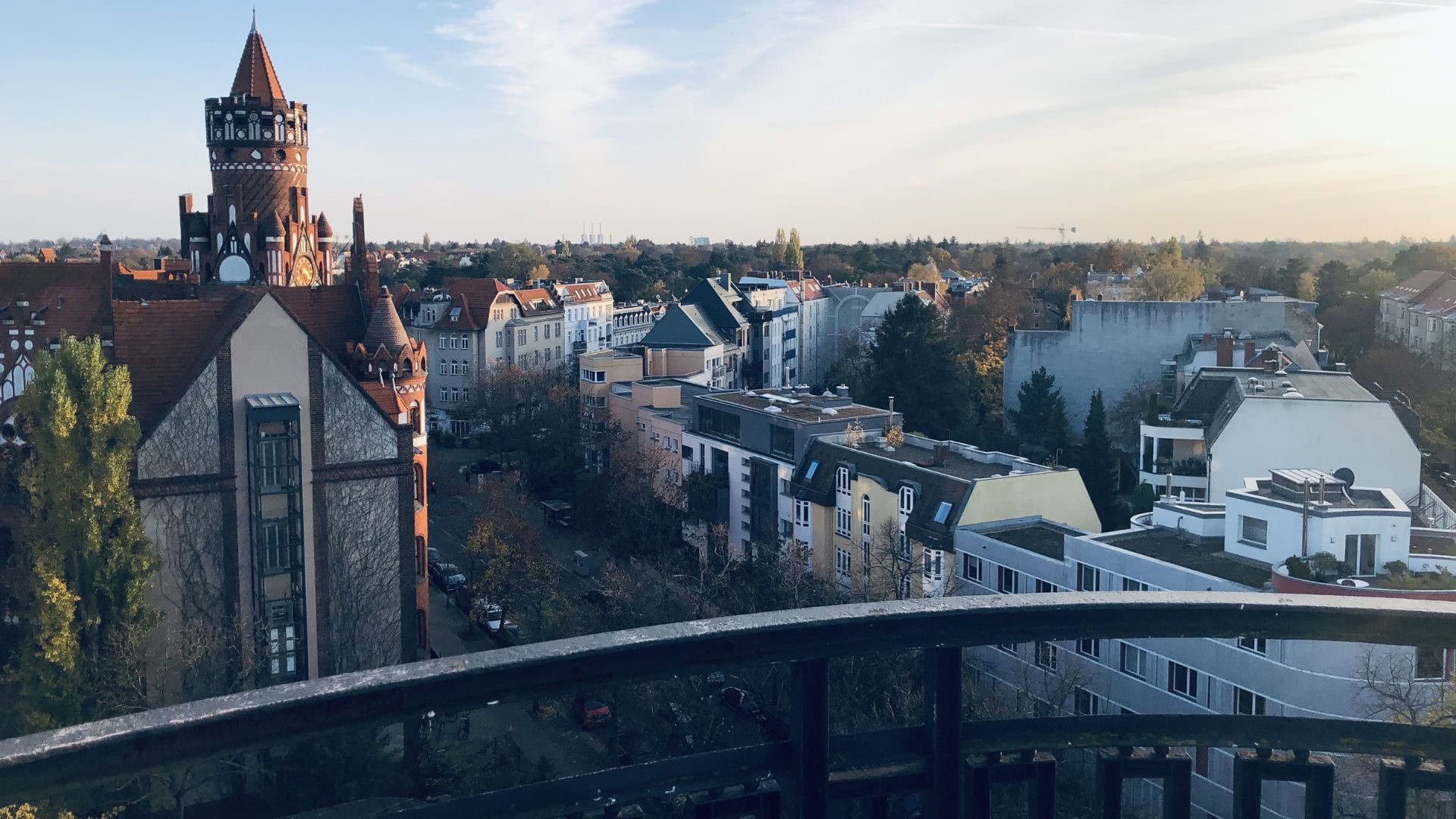
When the bell rings, I am already greeting my pupils in the corridor. It’s the first moment of connection. Some children give me a hug or wave enthusiastically.
“Look, Miss Karcher, I’ve got new shoes!”
“Can we carry on with the poster today?”
“Did you see the rainbow yesterday too?”
Conversations of all kinds emerge. Once ready, the children make their way into the classroom. And then a scene unfolds that would have made my teacher training supervisors deeply uncomfortable.
Nobody is ready when the bell rings
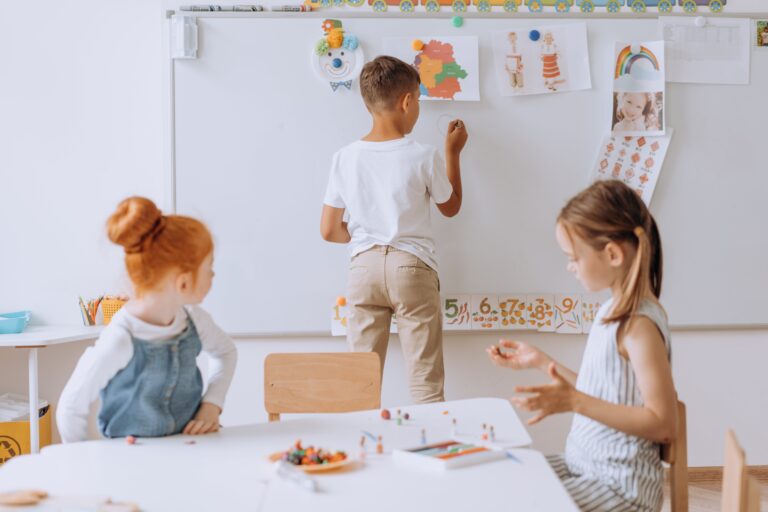
Two girls are practising gymnastic moves they learnt the day before whilst a few children watch. A group has gathered around one boy’s Harry Potter drawings. Some children are sitting at their desks, finishing their breakfast or completing yesterday’s tasks. Others are writing in their cursive handwriting books or playing with materials from the maths corner. One boy is working on his art piece, and a handful of children are curled up in the reading nook.
And what am I doing? That varies just as much as what the children are doing. Some mornings I eat my porridge, drink tea, and chat. Sometimes I prepare the classroom for the day ahead, set up the board, or hang up new vocabulary cards. When it makes sense, I catch up with a child who was absent the day before or who hasn’t quite understood something yet. Or I simply observe.
Of course, I was taught differently during my teacher training. The bell rings. Sit down, materials out, let’s go. My supervisors used to raise their eyebrows if this took longer than five minutes. Children must function, and it was my job as a teacher to make sure of that. If it didn’t work, either I wasn’t good enough or the children weren’t good enough.
But the first lesson always felt fake to me. Because in reality, nobody is “ready.” Everyone is still in their own world. The world we live in, the world that shapes us, and the world we cannot simply shut out by closing a classroom door.
Why this matters for your child
What I realised through years of starting the day this way is something that sounds almost too simple: children need to arrive before they can learn.
I wanted to know that Leon’s mum had left for a conference in Paris that morning. I wanted to know that Lynn was tired because she’d spent too long at the computer the night before. I wanted to know that Max had had a nightmare he couldn’t shake.
Because only when I knew these things could I truly respond to each child. Only then could I understand why they were doing (or not doing) certain things.
What surprised me even more was that the children often came to school with their own plans for the day. Not just me as the teacher. They were still thinking about yesterday’s maths problem and wanted to finish the exercises. They wanted to continue writing their story about the opera. They had new ideas for their research projects and wanted to jot them down. If I simply started with “my plan” without any exchange, I would have suffocated everything that could have naturally emerged from the children themselves.
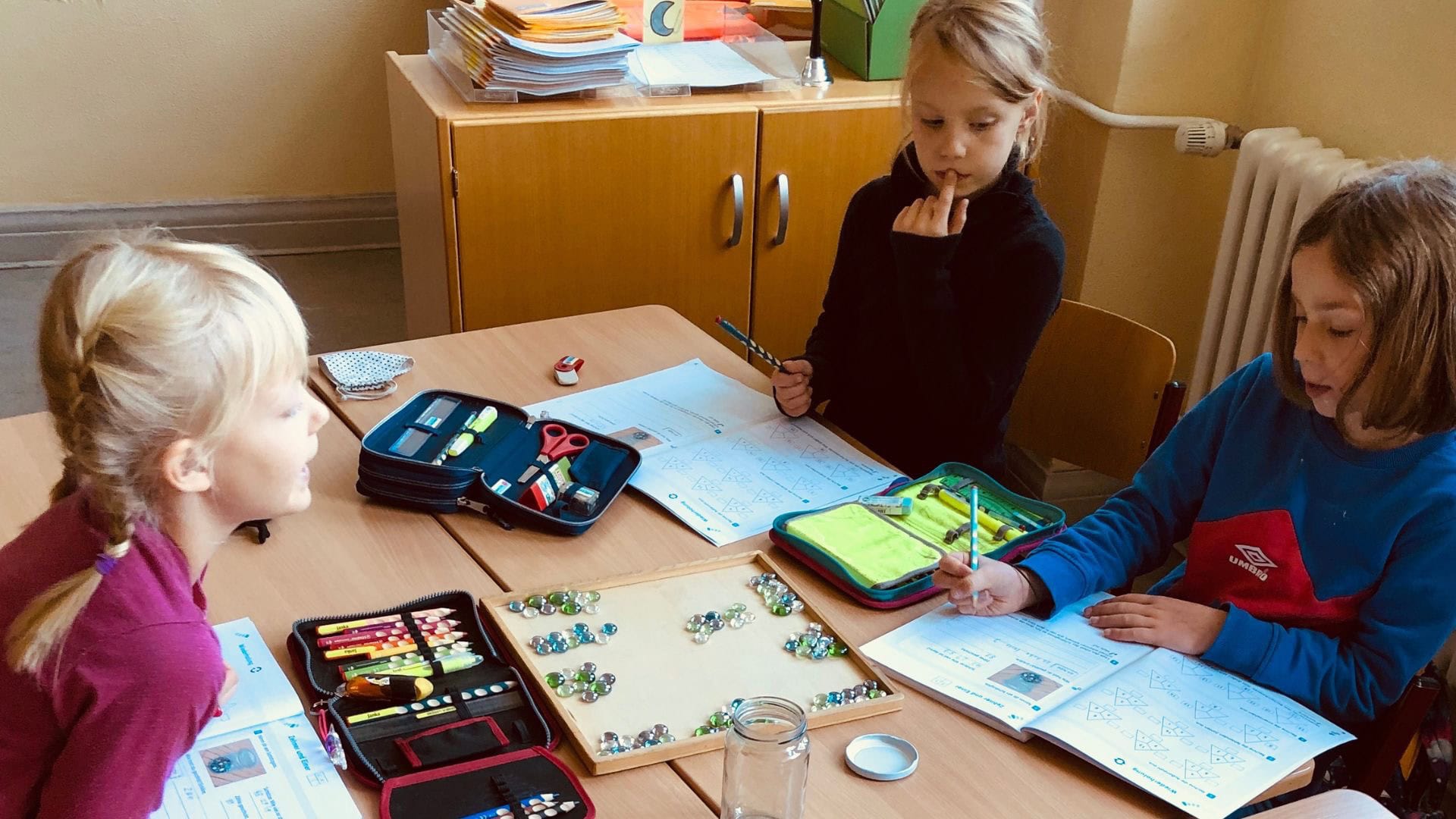
What may look like a relaxed, unstructured start to the day is anything but. Over weeks and months of starting my mornings this way, I began to see profound changes, not just in the atmosphere of the classroom, but in how the children connected with one another, how they learned, and how I was able to respond to each child as an individual.
Genuine connection. I watched the children truly get to know one another. Through relaxed conversations in the classroom, an entirely new sense of community developed. Children finally had time to talk and share what was on their minds. Sometimes someone would bring a toy, a friendship book, a joke book, or stickers from home to show the others. Conflicts became less frequent, simply because a little pressure had been released from the system.
More productive learning, not less. We didn’t lose any learning time. We gained it. When the children were genuinely ready to learn, we were far more productive and they completed their work in less time. During focused learning periods, there were no more whispered conversations with neighbours or secret peeks at joke books under the table.
Space for every child. I suddenly had far more opportunities to respond to individual children. I could observe calmly and discover through conversations how each child was doing. I could use the free time to practise reading with one child or help another catch up on missed work. Some children could rehearse a poem together or quiz each other on multiplication tables.
My observations were compelling enough that I asked to be timetabled for the first lesson in my own class every day the following year.
What the open morning taught me and why it shapes Schola Vera
This experience opened a door that I couldn’t close again. It showed me how much becomes possible when you give children space, and how little of what we take for granted in schools is actually necessary.
When I think about Schola Vera, what happens during those first 20 to 40 minutes of an open morning is what we aim for throughout the entire day. The principles of the open morning run through everything we do.
There is no rigid, artificially constructed structure dictated by lesson periods and school subjects. Instead, the whole day follows a natural rhythm.
A school without subjects
That means no school subjects. I don’t want to sort what children do and learn into neat little boxes. I want us to be free from categories and hierarchies.
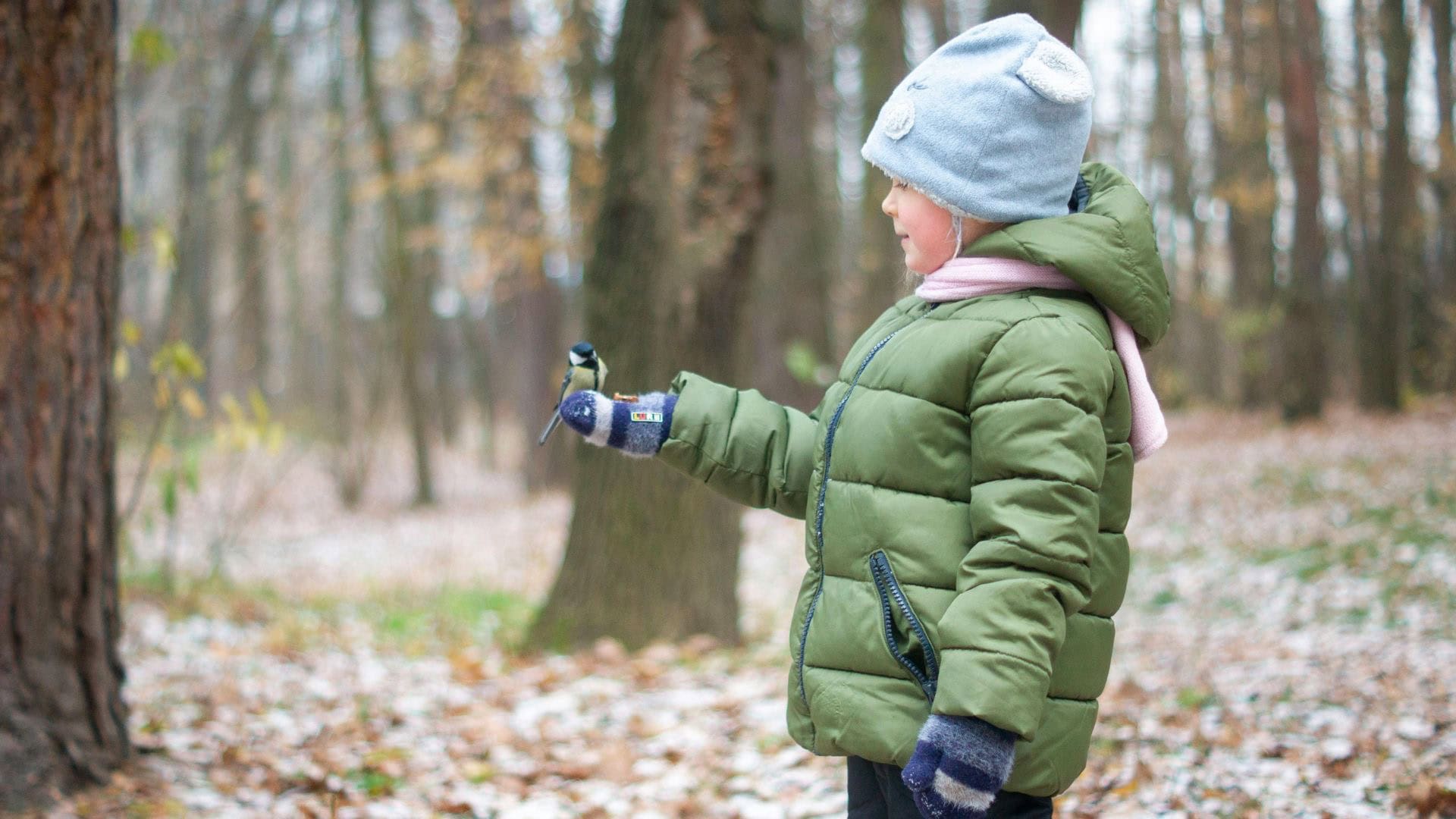
Imagine this: a child observes the birds in the school garden. She notices they are all different. Their body shapes, the colours of their feathers, the shapes of their beaks, the sounds they make. She picks up a bird book and happens to find some of the birds from the garden. She tries to read their names and find out what they eat. I walk past and say: “Would you like to create your own bird book, with the birds from our garden? You could share your discoveries in a little presentation with us when you are ready.”
Which school subject is that? Biology? Language arts? Art? No! It’s so much more than any of those.
The moment we create categories, we begin to limit ourselves. Are children allowed to draw the birds during language class, or must they only write? Can we explore why a bird can fly, or do we have to wait for physics? And in which subject are you allowed to simply sit in the garden and listen to birdsong?
Beyond that, categories inevitably create hierarchies. Is mathematics more important than music? Is art just something to fill the time? And what happens when a child simply isn’t interested in history?
Playing and learning are the same thing
What I also loved about the open morning was that there was no separation between playing and learning. Everything was allowed, and nobody questioned whether a child was really learning or just playing. Because what mattered was what the child needed at that moment. They were following their own natural needs.
Gerald Hüther captures it perfectly when he says that play is the highest form of learning. Children don’t learn in spite of playing. They learn precisely through it. During play, they are intrinsically motivated, deeply focused, and creative. These are exactly the states we so often try to manufacture in traditional lessons.
And this is what we want for Schola Vera. Every day, at every moment. Not as a brief morning ritual, but as a fundamental attitude.
From the open morning to the open school
Looking back, the open morning was far more than a classroom practice for me. It was the beginning of a shift in how I think about education. It showed me that children who are given space don’t waste it. They fill it. With curiosity, with connection, with real learning.
Much of what I tried and observed in my classroom within the conventional school system now flows directly into Schola Vera. A natural rhythm instead of rigid timetables. Trust in children’s curiosity instead of prescribed learning paths. The conviction that genuine learning only happens when children feel seen, heard, and safe.
If you’d like to explore how these principles come to life in practice, download our curriculum. It’s where philosophy meets the everyday.
Ready to Give Your Child the Education That Changes Everything?
At Schola Vera, we don’t just talk about natural learning. We live it every day. Our curriculum isn’t a collection of subjects to be mastered or boxes to be ticked. It’s a carefully crafted environment where your child’s innate curiosity, creativity, and joy can flourish without the pressure of grades, tests, or standardised expectations.
When children learn through play, follow their genuine interests, and develop within supportive mixed-age communities, something remarkable happens: they don’t just acquire knowledge. They fall in love with learning itself. They develop the confidence, resilience, and self-direction that will serve them throughout their lives, whatever path they choose.
This is what education can be when we trust children’s natural wisdom and create the conditions for authentic growth. This is what will change everything for your child.